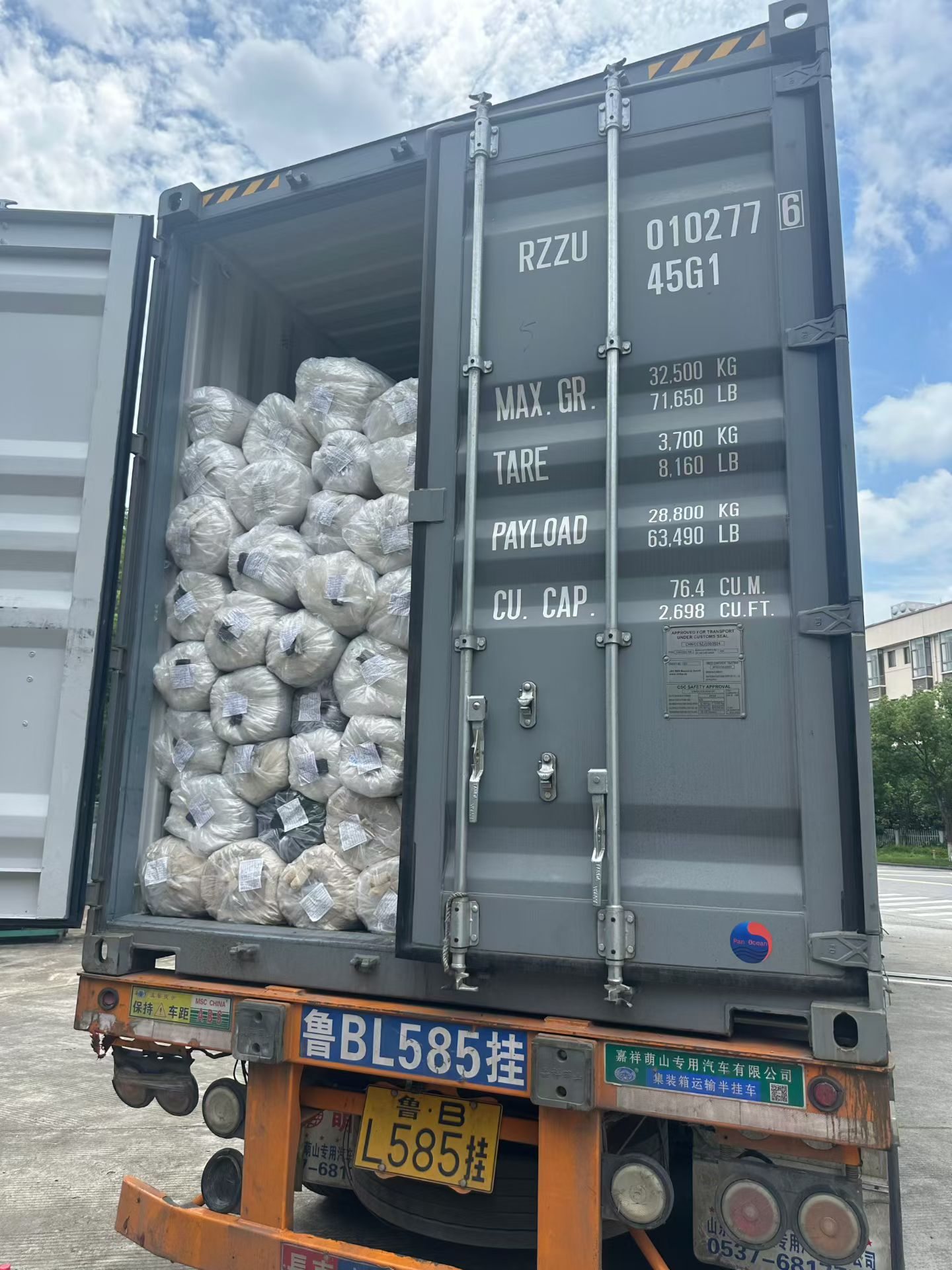
Getting it to Europe — and cleared once it arrives
Freight is the easy half. The half that strands containers is everything around it: whether the goods were checked before they left, whether the documents match the cargo, and whether somebody established in the EU is ready to declare them.
Sea · Northern Europe and the BalticRail · China – EuropeAir · when the date decidesConsolidation in our warehouses
Factory in ChinaPurchase or production to your specification
Our warehouse · Guangzhou / YiwuInspection, photos and video before loading
Hainan Silent International TradeExport from China
SIA DEXTRO · LatviaEU import on EORI LV44103144015: TARIC duty, import VAT
Your company in the EUEU invoice; intra-Community supply if you are in another member state
Simpler routes exist too: pay our Chinese company directly, or keep your own supplier under our control.
01 / Modes
Three ways in, chosen backwards from your date
The right mode is the one that hits the date you actually need at the lowest cost — which is not the same as the cheapest rate per kilogram.
Sea
Full container loads
The default for volume
Full containers into Northern European and Baltic ports. Goods from several suppliers can be combined in our warehouse to fill one. The lowest cost per unit by a wide margin.
Best cost per kilogram of any mode
Suits planned replenishment and bulky goods
Most exposed to schedule and congestion risk
Rail
China to Europe by train
The middle option
Faster than sea, cheaper than air. Useful for regular flows where you want to hold less stock without paying air rates every month.
Between sea and air on both time and cost
Good for steady, repeating shipments
Capacity varies — worth booking ahead
Air
When the date is the point
Expensive, and sometimes the cheapest option
For launches, seasonal windows, urgent spare parts and anything where arriving late costs more than the freight bill.
Fastest, and priced accordingly
Often used for part of a shipment, not all of it
Best value on high-value, low-weight goods
A combination is often the answerSend the part you need immediately by air and the rest by sea. It looks like an expensive decision on the freight invoice and is usually the cheap one on the profit and loss — a shelf that is empty for three weeks costs more than an air waybill.
02 / Duty and VAT
Import duty and VAT from China into the EU
The EU has one customs tariff: the duty rate depends on the commodity code (TARIC) and is charged on the customs value — the goods plus freight and insurance to the EU border. Then import VAT of the country of release is charged on the customs value plus duty, and a VAT-registered importer deducts it.
Anti-dumping duties — some goods from China, for example ceramic tiles and e-bikes, carry duties on top of the normal rate. We check the code before you order.
From 1 July 2026 — parcels under EUR 150 lost their duty exemption and pay a flat EUR 3 per item. This concerns low-value e-commerce parcels; B2B consignments are cleared at tariff rates as before.
CBAM — importers of more than 50 tonnes a year of iron, steel, aluminium and articles of them, cement or fertilisers must be authorised CBAM declarants from 2026.
GPSR and CE — a consumer product on the EU market needs a responsible economic operator established in the EU, named on the product or packaging; products under EU harmonisation law need a declaration of conformity and CE marking. We build the marking into the packaging at the factory.
Import VAT is charged on the customs value plus duty and is deductible for a VAT-registered importer. Anti-dumping duties apply to some Chinese goods and are not included here — we check them by commodity code before you order.
Import VAT by EU country
Germany19%
Poland23%
Netherlands21%
Belgium21%
Latvia21%
Lithuania21%
Estonia24%
Finland25.5%
Czechia21%
Slovakia23%
Austria20%
France20%
Italy22%
Spain21%
Shipping from China to Germany
Import VAT is 19%, duty follows the TARIC code, and the importer needs an EORI number. Alternatively we import on our Latvian company and deliver to Germany inside the EU: for a German VAT-registered buyer that is an intra-Community supply — 0% on the invoice, with VAT self-assessed and deducted in Germany.
Shipping from China to Poland
Import VAT is 23%. The same two routes apply: import in your own name on your EORI, or buy from our Latvian company as an intra-Community acquisition with VAT accounted for in Poland.
Shipping from China to Latvia, Lithuania and Estonia
Import VAT is 21%, 21% and 24%. Our EU company, SIA DEXTRO, is in Latvia: for a Latvian buyer, a sale from it is an ordinary domestic supply with 21% Latvian VAT. By sea, goods can enter the EU through Baltic ports, including Riga.
03 / EU product rules
What we check before shipment so the goods are accepted in the EU
EU product requirements are cheapest to meet at the factory, where marking goes onto the product and the packaging, rather than being relabelled in a European warehouse. So we check them before loading.
Requirement
What we check before shipment
Which products
CE and EU declaration of conformity
CE mark on the product or packaging, declaration of conformity and test reports from the manufacturer
Electrical goods, machinery, toys, radio equipment, PPE and other products under EU harmonisation law
EU responsible person (GPSR)
Name and address of the EU operator on the product, packaging or accompanying documents
Non-food consumer products
Product identification (GPSR)
Type, batch or serial number, manufacturer's name and contact details
Non-food consumer products
Instructions and warnings
In the language of the country of sale — built into the packaging at the factory
Products that need them for safe use
WEEE mark
Crossed-out wheeled bin on the product
Electrical and electronic equipment
Battery marking
Separate collection symbol
Batteries and products containing them
RoHS and REACH
Test reports on restricted substances
Electronics — RoHS; articles and materials — REACH
Food contact
Declaration of compliance and the glass-and-fork symbol or a statement of intended use
Tableware, containers, food packaging
Our role, plainlyWe are not a certification body or a test laboratory. We check that the marking and documents exist, belong to this product and match what is in the box — before shipment. Testing is done by an accredited laboratory; if it is missing, you find out before you pay for the batch, not at customs.
04 / What we add
What a freight forwarder does not do
Booking space on a ship is a commodity service, and there are good forwarders everywhere. The parts that go wrong sit either side of it.
Before it shipsThe batch is inspected in our warehouse against your specification. A forwarder loads what it is given, defects and all.
ConsolidationGoods from several factories become one consignment with one set of documents and one customs entry.
Documents that matchInvoice, packing list and declaration describing the same goods — the commonest cause of a container being held.
The EU endEntry on our own EORI, or full support for yours. Either way, somebody established in the Union is ready to declare the goods.
Control and predictability
We sell control and predictability in China
You are in Europe, the factory is in China. We sit on the factory's side and check EU requirements before the goods move.
Checked before it ships
Batch checked against the specification in our warehouse
CE, declaration of conformity and the GPSR responsible person on product and packaging
TARIC code and anti-dumping duties before you order
Photos and video before loading
Written into the contract before you pay
Contract with our company in China or in Latvia
Specification and acceptance criteria
Lead time, price and how the goods enter the EU
Claims against the factory are handled by us, not you
The rate depends on the commodity code in the EU tariff (TARIC) and is the same in every member state. It is charged on the customs value — the price of the goods plus freight and insurance to the EU border. Some goods from China also carry anti-dumping or countervailing duties well above the normal rate. We check the code before you place the order.
How is import VAT calculated?
At the standard rate of the country where the goods are released for free circulation — Germany 19%, Poland 23%, the Netherlands 21%, Latvia and Lithuania 21%, Estonia 24% — on the customs value plus duty. A VAT-registered importer deducts it as input tax.
What changed on 1 July 2026?
The customs duty exemption for parcels under EUR 150 ended: a flat EUR 3 duty now applies to each item in such low-value e-commerce consignments. Commercial B2B shipments are cleared as before, at the rates in the EU tariff.
Do we need an EORI number?
Anyone importing into the EU in their own name needs an EORI number. If you would rather not act as importer, we can clear the goods on our Latvian company, SIA DEXTRO (EORI LV44103144015), and sell them to you inside the EU on an EU invoice.
How long does it take?
We quote per shipment and put the figure in the contract instead of publishing one. Real transit depends on the production queue at the factory, consolidation, sailing schedules, port congestion, customs and the final leg. The gap between a smooth run and a difficult one on the same route is measured in weeks, and a number in a brochure hides that rather than answering it.
Sea, rail or air — how do we choose?
By working backwards from the date you need the goods, not forwards from the cheapest rate. Sea is the default for volume. Rail sits between sea and air on both cost and time and is useful for regular replenishment. Air is for cargo where being late costs more than the freight — a launch, a season, a line stoppage.
Can you consolidate goods from several suppliers?
Yes, and it is one of the more useful things we do. Goods from different factories come into our warehouse in Guangzhou or Yiwu, are checked, then shipped as one consignment. That means one set of documents, one customs entry and often a container instead of several part loads.
Do you deliver to the door?
Yes. The final leg to your warehouse is part of the quote rather than a surprise afterwards, and we tell you upfront which port of entry we propose and why.
07 / Enquiry
Where does it need to land?
Describe the product and the volume. We come back with a workable structure, a quote including landed cost, and an honest lead time — or with the reasons we would not take it on.